


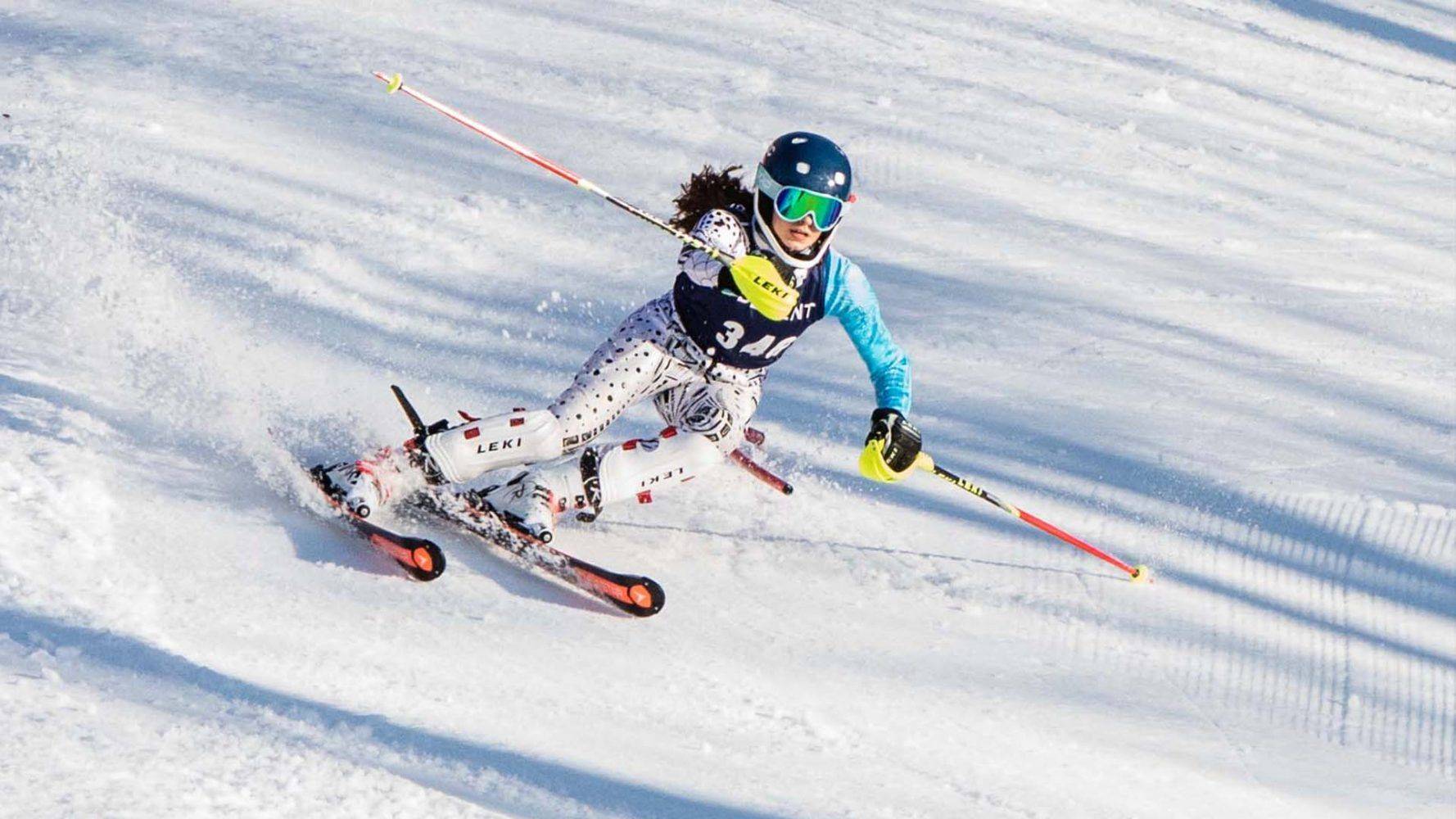
Flywheel Training for Alpine Skiing: Preparing for Repeated Turns and Hard Stops
The next Alpine Ski World Cup slalom arrives in Levi on 14-15 November 2026. The result will be decided in a course measured in gates, but the physical question is less tidy: can the skier keep producing force, absorbing the return and changing direction when every turn arrives before the last one has fully disappeared?
That is the useful way to think about strength training for alpine skiing. A skier does not need one impressive effort in isolation. The skier needs a body that can organise repeated lateral and vertical forces, hold a useful position through the turn, and leave the turn ready for the next decision. Flywheel Training fits this problem when it is used to make force production and force control visible in the movements around it.
The turn is a chain, not a single effort
Every turn changes the job. The skier enters with speed, manages pressure through the edge change, absorbs the terrain and directs the next line. A training movement cannot reproduce snow, edge grip, slope or race speed, but it can give the coach a clearer place to examine the physical demand.
The lower body has to produce force while the athlete stays organised. Then it has to receive force and control the return without losing the position needed for the next action. That repeated exchange matters in both technical events and speed disciplines, even though the course, speed and time under pressure differ.
Make force control part of the repetition
Flywheel resistance begins with the athlete accelerating a rotating mass. The energy returns through the belt or cable, so the lengthening phase is part of the same repetition rather than a separate afterthought. For a skier, that creates a useful training question: can the athlete continue to control the movement as the resistance comes back and the direction of force changes?
Exxentric’s skiing application describes targeted range of motion, variable resistance and the possibility of eccentric overload as relevant to the lateral and vertical forces of downhill skiing. Those are capabilities of the training method and equipment. The practical value comes from choosing a movement that makes the intended quality clear, then observing whether the athlete can repeat it with control.
The kBox is a natural fit for the lower-body side of that question. Squatting, splitting, hinging and lateral patterns give the coach different ways to expose force production and absorption without turning the gym movement into a claim that it is a ski turn. The exercise determines the training problem; the flywheel determines how the return has to be managed.
Give the trunk a job when the line changes
Skiing is not only a leg task. The skier must keep the upper body useful while the legs move underneath, and must manage the relationship between the pelvis, trunk and the direction of travel. That is where a cable path can add a different question to the session.
With a kPulley, the coach can use pulling, pressing and rotational options to explore how the athlete produces force when the resistance arrives from a chosen direction. A rotational exercise is not a substitute for a turn on snow. It can, however, make the athlete organise the trunk and hips around a defined line, then control the return before the next repetition.
That distinction keeps the training honest and more useful. The exercise does not have to look like skiing to support a ski-relevant quality. It has to give the athlete a clear relationship between force, position and the next action.
Build the season around the question in front of you
The Alpine calendar changes the emphasis without changing the underlying problem. The early technical races ask for repeated turns and fast adjustments. A speed weekend asks the athlete to manage higher-speed force and longer exposure. A coach preparing for the 2027 Alpine World Ski Championships in Crans-Montana, scheduled for 1-14 February, may need the same physical qualities expressed under a different event demand.
That makes the calendar a useful filter for training conversations. Before a technical block, the question may be whether the athlete can keep producing and absorbing force through repeated changes of direction. Before a speed block, the question may be whether positions and force control remain available as the run unfolds. The equipment does not decide that emphasis; the competition task does.
For teams, this also gives the weight room a more precise role. A kBox can support lower-body force and control work. A kPulley can add directional and rotational options. A compatible kMeter and the Exxentric App can support like-for-like review where the setup allows it, but the hardware and compatibility should be confirmed rather than assumed.
Keep the snow as the final judge
Gym training can expose a physical quality. It cannot settle whether a skier reads terrain well, chooses the right line or adapts to changing snow. Those remain sport-specific skills that belong in coached skiing. The limitation matters because it changes how the equipment should be used: as a way to develop and observe physical qualities that support the sport, not as a replacement for the sport itself.
The strongest ski preparation therefore keeps two conversations connected. On snow, the coach sees the turn, the line and the consequence. In the gym, the coach can isolate force production, force absorption, position and repeatability in a controlled setting. Each environment answers a different question.
Let the next turn shape the training question
As the Alpine World Cup moves from Sölden to Levi, the useful preparation question is not whether a gym exercise can imitate racing. It is whether the athlete can keep producing force, controlling its return and organising the next action when the course keeps asking for another turn.
That is where Flywheel Training earns a place in alpine preparation: it makes the exchange between acceleration and control part of the repetition, while leaving the coach free to choose the movement and the moment in the season that matter most.
Explore skiing-focused Flywheel Training
Review Exxentric’s skiing application to see how the method and equipment are positioned for downhill performance.
Season context: FIS. (2026). Crystal Globes in spotlight, 2026/27 calendars and wild cards set as Alpine Ski World Cup turns 60.
Product context: Exxentric. (2026). kBox | Exxentric | Flywheel Training; kPulley | Exxentric | Flywheel Training.
Product context: Exxentric. Skiing | Exxentric | Flywheel Training.
