Rotational Strength Training: From Throwing to Change of Direction with kPulley
The throw is already moving before the hand releases
Watch a throw from the ground up and the release is the final frame. The feet establish a base, the hips begin to open and the trunk carries the action toward the arm. The hand expresses the result, but it is not where the movement starts.
That matters for rotational strength training because a cable exercise should not be judged by how much it resembles a throw. A standing core twist or rotational sling rotation can give the turn a defined resistance path, while the coach still has to decide which part of the sporting action the exercise is making visible. The training value is in exposing the body to a clear demand through rotation, not in claiming that a gym movement reproduces release speed.
A strike needs a line that does not disappear
Striking is different. The athlete is not only turning toward a target; the body must keep a useful line through the contact while the base, hips and trunk move together. A single-arm press can make that line more apparent than a symmetrical press because the working arm has to organise the connection on one side of the body.
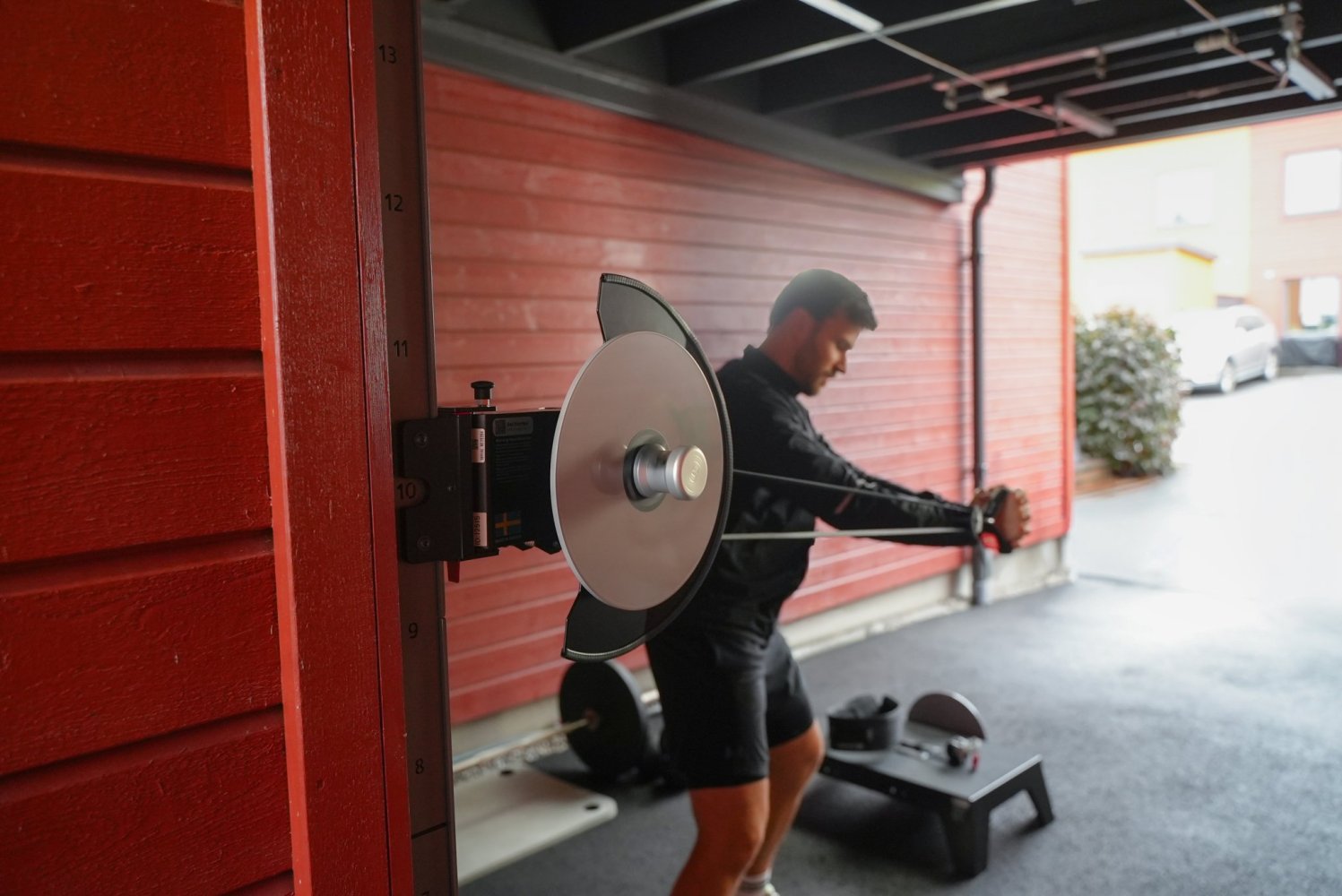
With kPulley, the cable can be set to meet the movement from a chosen height and direction. That adjustable path lets the exercise reflect the angle of the task without turning the session into a catalogue of abstract twists. The flywheel adds effort-responsive resistance: the user accelerates the flywheel, then meets the energy returning through the cable.
Wrestling turns the body while the floor keeps changing
In wrestling, rotation rarely arrives as a clean turn from a stable start. An opponent changes the line, the feet reposition and the athlete has to keep working while the body is no longer square to the original direction. That is why a wrestling rotation belongs in the conversation as its own sporting action, rather than as another name for a wood chop.
The official kPulley exercise library includes wrestling rotation alongside standing core twist, standing wood chop, single-arm press and single-arm row. The differences between those options matter. A wrestling rotation points toward a close-range, shifting task; a row asks the athlete to keep a pulling connection; a wood chop gives the turn a more defined diagonal route. The movement name is useful because it tells the coach what problem the exercise is intended to illuminate.
Changing direction is a turn with a deadline
A change of direction adds a different constraint. The athlete has to arrive at a new line before the next action, so the turn is inseparable from the decision to brake and leave. A lateral or angled cable path can help make that direction change tangible, but a kPulley exercise is still resistance training rather than a promise of automatic agility transfer.
That distinction keeps the equipment in a positive, accurate role. kPulley offers a horizontal flywheel system with an adjustable cable path and a broad exercise range that includes rotational, unilateral and angled pulling work. It can help a coach shape the direction of resistance around the movement being trained. The sport determines why that angle matters.
The way back changes the meaning of the turn
In each action, the return phase deserves attention. When the user accelerates the kPulley flywheel, energy is stored in the rotating system. As the belt returns, the user controls that energy through the eccentric phase. In a throw, that can mean preparing for the next action after release. In a strike, it can mean recovering the line. In wrestling, it can mean staying connected as the position changes. In a change of direction, it can mean being ready to move out of the brake.
This is where the flywheel contributes something specific to the movement discussion. The return is not a generic lowering phase detached from the action that created it. It is the next demand the athlete has to manage, even though the exercise cannot stand in for the sport itself.
Use the hardware that the movement actually needs
The accessory changes what the athlete can do with the cable. The kPulley exercise library includes single-arm and rotational options, and Exxentric identifies the Rotational Sling as a separate accessory for rotational sling rotation. That distinction belongs in the selection decision: a movement may be listed in the library, while the relevant accessory remains an additional equipment requirement.
For coaches who need feedback, a compatible kMeter and the Exxentric App can record concentric and eccentric power, range of motion and force estimates for supported setups. The App also supports repeatable endpoints such as reps, time or selected drop-off measures. The most useful comparison is usually the same athlete performing the same movement over time; the official guidance cautions against treating approximate force values as a universal ranking across people or exercises.
Let the sporting action set the question
A throw asks where force goes before release. A strike asks whether the line survives contact. Wrestling asks whether rotation remains useful while the base changes. A change of direction asks whether the athlete can leave the turn on time. Those are different reasons to train rotation, even when the exercise names overlap.
kPulley earns a role when its adjustable cable path and flywheel return make one of those questions easier to see and repeat. The movement should decide the question; the equipment should make the answer trainable.
Explore rotational movement options
Browse Exxentric’s official kPulley exercise library for rotational, unilateral and angled cable exercises.