


How to Choose Flywheel Inertia for Strength, Power and Technique
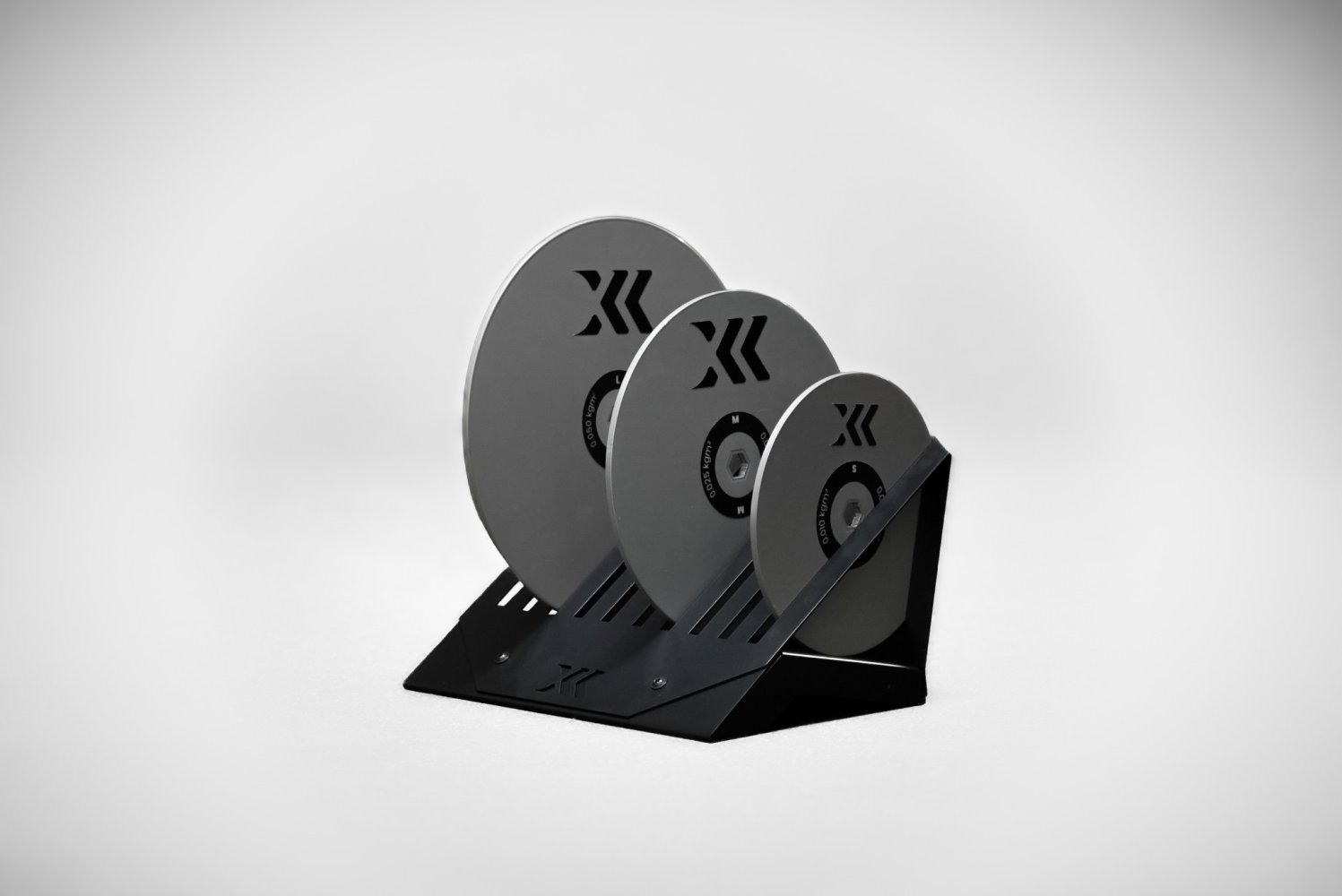
A lower setting may let you move quickly, while a higher setting can give you more time and resistance to organise force. Each choice serves a different training job. The useful question is what you want the exercise to ask of you today.
Before changing a flywheel, name the quality you want to train. Are you trying to learn a new movement, express speed, produce force or control a demanding return phase? That decision gives the inertia a job and makes the session easier to read.
Start with the training job
Flywheel resistance is created by accelerating a rotating flywheel. The energy stored during the outward phase returns through the belt or cable, and the user has to control that energy as the movement comes back. The demand therefore comes from the selected inertia and from how the person applies force. Exercise, range of motion, leverage and intent shape the result as well.
Treat inertia as its own training variable rather than a direct kilogram equivalent. A setting that feels demanding in a smaller movement may behave differently in a squat or a pulling exercise. The training zone belongs to the combination of inertia, speed and exercise.
Let speed and control reveal the zone
The current Exxentric inertia guidance groups flywheel work into practical zones such as warm-up and preparation, technique, power, strength and overload. These are training intentions, not fixed labels attached to one flywheel size.
Use the movement to check whether the selected inertia is doing its job. If the goal is technique, the repetition should give the trainee enough time to recognise the rhythm, reach the intended range and control the return. If the movement becomes rushed before the person understands the timing, the setting or exercise may be asking for more speed than the session can usefully support.
The same check helps when the goal is performance. A fast repetition only counts as power work when the athlete can keep producing speed with a clear, controlled change of direction. A slower repetition may be valuable when the objective is force production or eccentric control. The label matters less than the quality that can be repeated.
When the goal is power
Power work needs speed and intent. Lower inertia can make it easier to accelerate the flywheel quickly, which is useful when the session is organised around fast force production. The athlete still has to control the return phase; speed on the way out does not remove the need to brake on the way back.
For a coach, this changes what should be watched. Look at whether the athlete can keep the movement fast without losing position or rhythm. If speed falls sharply, the set may have moved away from the intended power emphasis. A compatible kMeter and the Exxentric App can help review like-for-like output when the device, exercise, setup and measurement conditions stay consistent. The data is most useful for comparison with the athlete’s own previous work; across different exercises, the numbers lose meaning.
When strength needs more force
Higher inertia generally slows the movement and can support a more force-oriented effort. That can make the return phase longer and more demanding to control, which is relevant when the session is built around strength or force absorption.
The practical decision is still about the movement. A higher setting is useful when the athlete can keep producing force through the intended range and manage the returning energy with control. If the exercise loses its shape or the athlete cannot organise the change of direction, the added inertia has become the main event instead of serving the training objective.
This is also where the difference between eccentric loading and eccentric overload matters. Flywheel exercise always involves controlling returning energy during the lengthening phase, while true eccentric overload requires a defined method and specific intent beyond inertia alone. Treat deliberate overload as a progression for an experienced trainee with an appropriate exercise and coaching context.
Where technique fits
Technique is not a lesser version of strength or power work. It is the point at which the trainee learns how to interact with the resistance. Moderate inertia and controlled effort can give a new user enough time to coordinate the movement, recognise the return and repeat the range without chasing output.
That learning process is especially important when moving between exercises. A person who understands a squat on one device still has to learn how a split squat, hinge or cable movement changes the timing and leverage. Keep the training job clear and let the exercise determine whether the existing setting still makes sense.
Make the next adjustment from repeatable evidence
The most useful inertia change is one you can explain afterwards. Record the exercise, selected inertia, intent and the quality you observed. Then compare like with like: the same movement, setup, range and measurement approach where possible.
Three questions for the next session
- Did the selected inertia allow the intended speed or force quality?
- Could the athlete control the return phase without losing the movement?
- Can the same standard be repeated before adding complexity or demand?
If the answer is no, change one variable and learn from that change.
A different inertia, exercise or effort level can alter the training emphasis, so changing everything at once makes the result harder to interpret.
Let the goal choose the inertia
Flywheel inertia shapes the movement; its value is in the quality it helps you repeat. Lower settings can support speed, higher settings can support force and controlled return, and moderate settings can give technique the time it needs. The best choice lets the intended quality appear clearly enough to repeat and develop.
Review Exxentric’s current inertia guidance to connect the training goal, exercise and flywheel setup before your next session.
Review the current inertia guidance
Explore Inertia in Flywheel Training for the current Exxentric workout-zone overview.
Training guide: Exxentric. (2024). Flywheel Training: Training Guide, workout-zone guidance.
