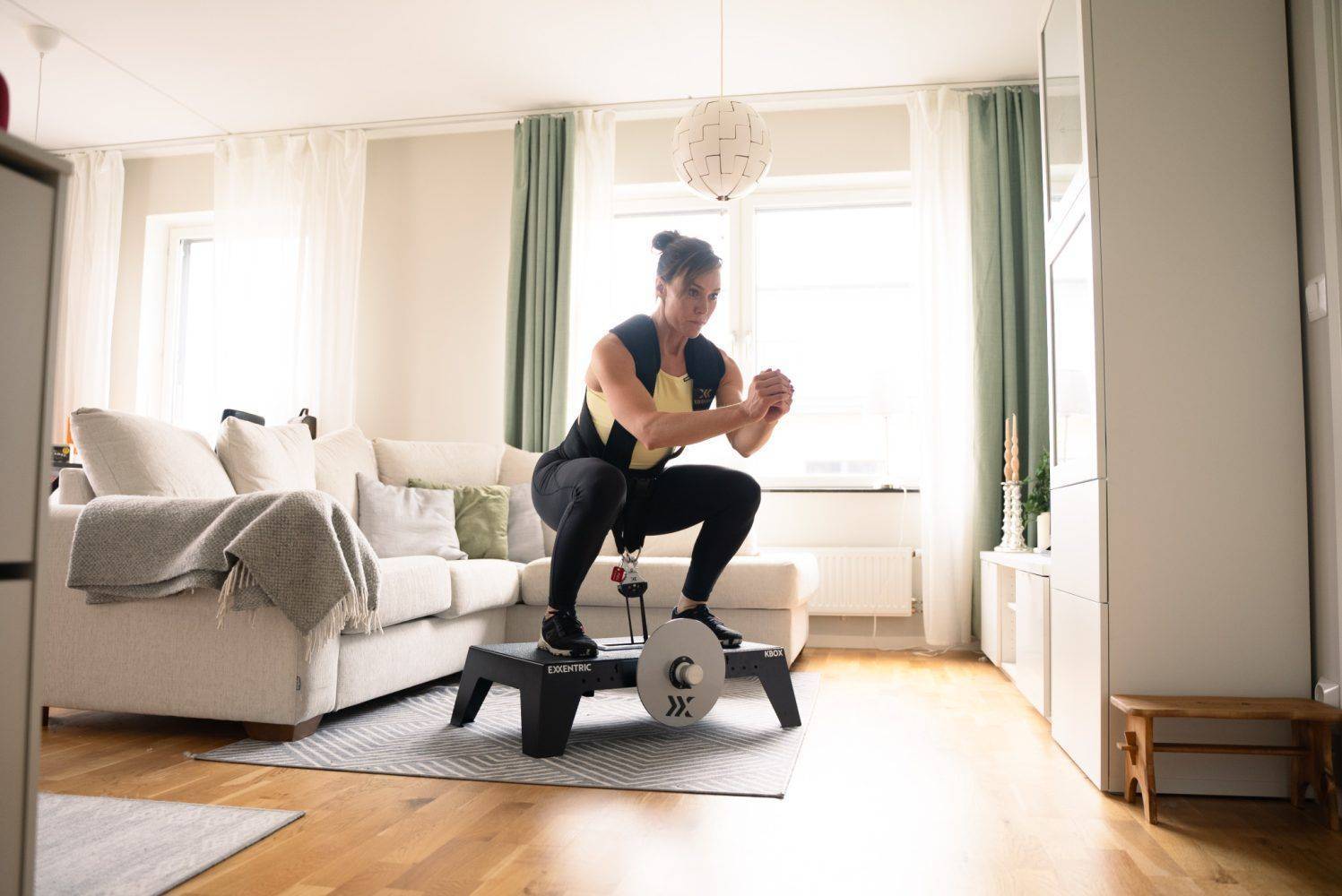
Is Flywheel Training Suitable for Beginners?
Flywheel Training is resistance training that uses a rotating flywheel instead of a fixed weight. You accelerate the flywheel during the outward phase of a movement, then control the energy it returns during the way back. That pattern can feel unfamiliar at first, but it does not require advanced training experience to learn.
A sensible first step is simple: choose an appropriate exercise, begin below maximal effort and learn to keep the movement smooth before trying to make it harder. Exxentric’s official tutorials and getting-started guidance show the device-specific setup and stopping procedures.
The first difference is the returning energy
With a barbell or dumbbell, the external load is comparatively familiar from one repetition to the next. With a flywheel device, the resistance comes from the energy you put into the flywheel. A harder or faster effort stores more energy, which you then need to control as the flywheel returns.
That is why the first session is partly a timing lesson. You are learning how much effort to use, when the direction changes and how to brake without losing control. Flywheel Training does not automatically make an exercise safe or suitable, so the movement, setup and effort still need to match your experience.
Start by learning control, not chasing intensity
For a new exercise, the useful target is a repeatable movement that you can accelerate and decelerate without rushing. Begin with submaximal effort and focus on controlling the returning phase. If you are using a kBox, the kBox getting-started course covers harness position, spotting, stopping an exercise, drive-belt movement and range of motion.
For a kPulley, the kPulley getting-started course covers unpacking, mounting, accessory selection, setup and exercise examples. Follow the instructions for your specific model rather than combining steps from different devices.
Inertia changes how the movement feels
Inertia is the relevant unit for a flywheel. It is not a direct kilogram equivalent, because the training demand also depends on the exercise, range of motion, leverage, speed and how you apply force.
In general, lower inertia allows faster movement, while higher inertia tends to slow the movement and support a more force-oriented effort. These are useful tendencies rather than universal rules. Exxentric’s current guidance recommends M or L flywheels for first-time exercises, while its training guide advises starting new exercises with medium inertia and low intensity. Treat that as a starting point to learn the movement, not as a setting that suits every person or exercise.
A compatible flywheel, accessory and device also matter. Check the current product or manual information before changing inertia, especially if you are using a kPulley mount or a system with model-specific compatibility.
A useful first-session checklist
- Set up the device and accessory according to the official instructions for your model.
- Check that the flywheel and connection points are secure and that the training area is clear.
- Use a familiar movement or an official exercise tutorial so you can focus on the resistance pattern.
- Begin with controlled, submaximal effort and keep the drive belt from going slack.
- Decelerate the flywheel fully before disconnecting or stepping away from the device.
The exact setup, stopping method and range-of-motion adjustment depend on the device. Use the official tutorial as the final authority.
What should you expect after the first session?
You may notice that the movement feels different from conventional resistance training even when the exercise looks familiar. The first useful sign is improved coordination: you can repeat the movement with a steady rhythm, control the return and finish without needing to stop abruptly.
There is no need to test advanced eccentric-overload methods on the first session. Eccentric overload requires a specific method and is not created automatically by using a flywheel. Exxentric describes those methods as advanced training approaches taught through its education resources.
When should you get extra guidance?
Beginners who are unsure about the equipment, movement or how to control the returning phase can benefit from an introduction with a qualified coach or an Exxentric Flywheel Intro Session. That is especially useful when the device is being used in a professional, clinical or shared training environment.
If you have persistent or worsening pain, an injury or a medical concern, seek advice from an appropriately qualified professional. Flywheel equipment is a training tool; it is not a diagnosis or treatment.
A good first session leaves room to learn
Flywheel Training can be suitable for beginners when the first goal is familiarity rather than maximum output. Learn the setup, use an appropriate starting inertia, keep the effort controlled and let the official guidance for your kBox or kPulley determine the details.
Once the movement feels predictable, you can make informed decisions about exercises, inertia and progression.
Start with the official tutorial
Choose the Exxentric tutorial for your device before your first session and keep the model-specific manual available while you set up.