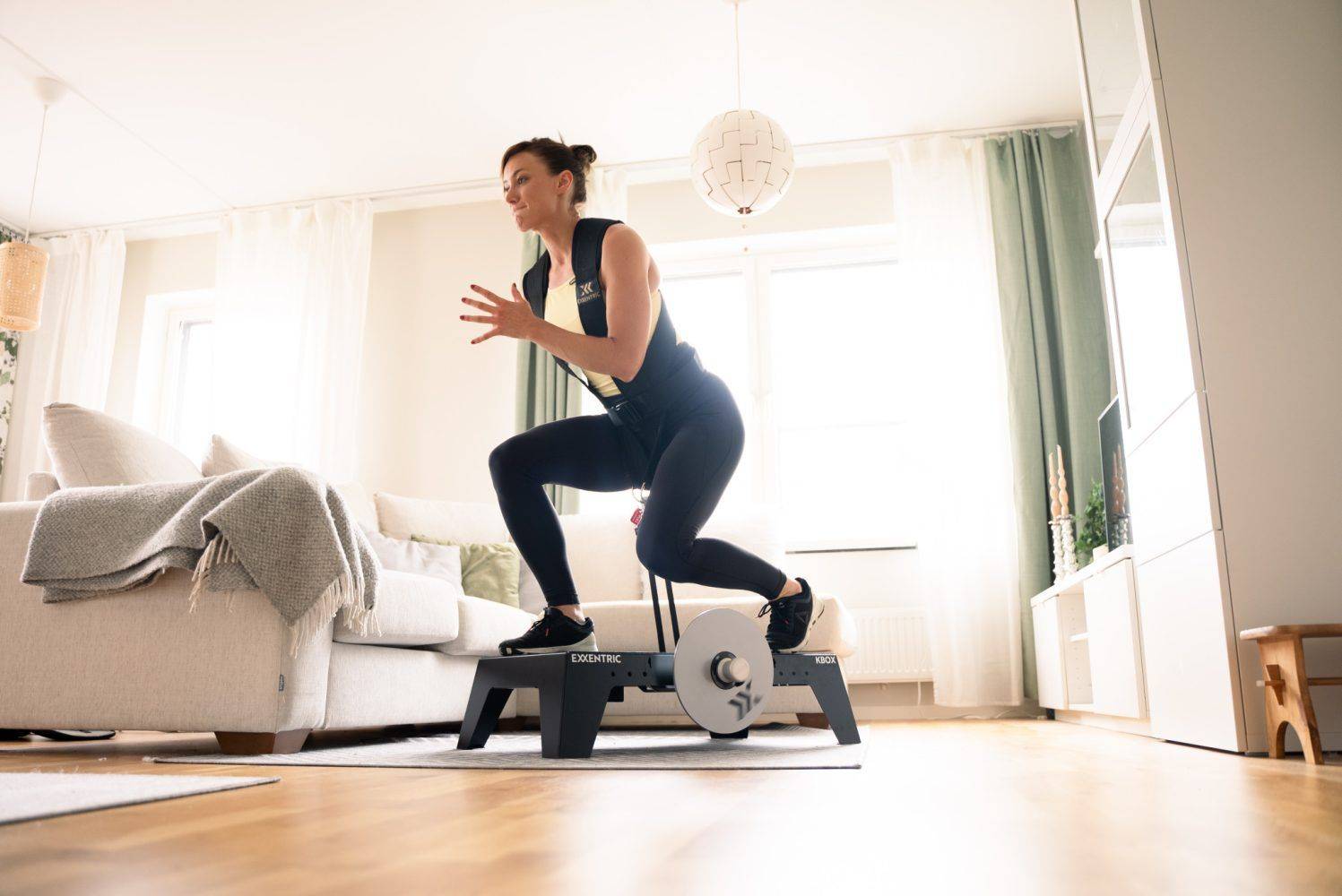
Flywheel Training for GLP-1 Muscle Preservation: Lose Weight, Not Strength
Executive summary
GLP-1 medications can drive clinically meaningful weight loss, but weight lost is not automatically weight lost well. Recent analyses estimate that lean mass may represent roughly one-quarter of total weight lost on average, although lean mass is not identical to muscle and individual results vary. Resistance exercise helps protect fat-free mass and strength during weight loss. For home users, the compact kBox Active lowers the practical barrier. The growing shift inside gyms toward strength, function, and muscle preservation reinforces the same conclusion: resistance training should be part of the plan, wherever you choose to do it.
The arrival of GLP-1 medications changes what strength training needs to do for the people using them.
If medication is already doing much of the work of reducing body weight, another calorie-burning routine is not enough. You need something medication cannot provide: a progressive training stimulus that helps preserve muscle, build strength, and protect physical function.
Facilities are beginning to respond by placing resistance training at the centre of GLP-1 support. That shift matters, but you do not have to wait for a new gym service to act on it. With the right equipment, the same priority can become part of your routine at home.
This is the paradigm shift. Weight loss may create the opportunity. Strength should shape what you carry forward.

A lighter body is not enough
Fat mass and lean mass can both fall during weight loss. Lean body mass includes muscle, water, glycogen, organs, and other non-fat tissue, so a body-composition result should not be described as pure muscle loss. Even with that distinction, preserving skeletal muscle and strength matters. Muscle supports everyday movement, physical independence, training capacity, and the ability to remain active as body weight changes.
The 2026 review Optimizing Weight Loss in the GLP-1 Era argues that treatment quality should be judged by more than total weight reduction. It recommends resistance training alongside adequate nutrition and monitoring of muscle-related outcomes.
The point is not that GLP-1 medications uniquely destroy muscle. Lean-mass loss also occurs with other forms of weight reduction, and the proportion varies. The point is that substantial weight loss creates a reason to protect the tissue and physical capacity you want to keep.
The scale measures less. Strength training protects more.
A 2025 systematic review and meta-analysis found that adding resistance exercise during diet-induced weight loss improved fat-free-mass preservation, fat-mass loss, and strength without materially changing total body-weight loss.
That is the difference between losing weight and losing weight well: a similar change on the scale can conceal a better result underneath it.
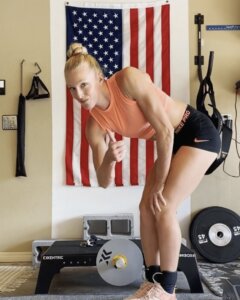
An honest evidence boundary
Direct trials of Flywheel Training specifically in people taking GLP-1 medications remain limited. The case combines direct evidence that resistance exercise supports fat-free-mass preservation during weight loss with broader evidence that Flywheel Training can develop strength and muscle in other populations.
That is an evidence-informed application, not proof that a particular Exxentric programme prevents muscle loss during treatment. Our earlier article, Why Strength Training is a Great Complement to GLP-1 Drug Treatment, provides more background on the same argument.
What the shift inside gyms means for you at home
For decades, much of the fitness industry sold weight loss through calorie burn: move more, sweat more, and make the number smaller. GLP-1 medications disrupt that model because many people no longer need exercise to be the main driver of weight reduction.
They need exercise to help protect what weight loss can take with it.
As the Club Solutions discussion argues, facilities are beginning to move supervised resistance training to the centre of their GLP-1 offer. Progress is increasingly being considered through strength, consistency, movement confidence, and physical function, not kilograms alone.
For home users, that industry shift provides a useful signal. Your training goal should also move beyond burning calories. The setting may be different, but the priority is the same: build and maintain the strength that supports life after weight loss.
Why Flywheel Training lowers the barrier
The user accelerates a flywheel through the lifting phase and controls the stored energy as it returns. Resistance comes from the user’s effort and the selected inertia, so it adapts from repetition to repetition.
A beginner can start at an appropriate effort on the same platform that provides room to progress as strength improves. For a home user, that means one compact system can support the journey from learning the movements to building a consistent, increasingly challenging routine.
A strength solution at home
A conventional home gym can require racks, plates, dumbbells, benches, and significant floor space. A gym membership adds travel and the daily negotiation of whether the trip is worth it. The obstacle is often not belief in strength training. It is friction.
The kBox Active has a footprint of approximately 81 by 51 centimetres and supports squats, hinges, rows, presses, curls, calf work, and other movements without a room full of conventional weights. Combined with the Hip Belt, it provides an accessible route into lower-body exercises without placing a bar across the back.
Most importantly, it is available. Ten useful minutes before breakfast can be easier to repeat than an hour reserved for the gym. For someone adapting to GLP-1 treatment, convenience can be the difference between intending to preserve muscle and consistently training it.
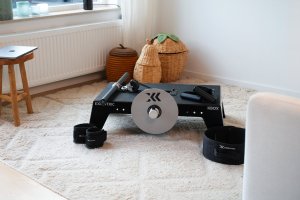
Four movements cover the foundation
Microdosing: make the session too small to avoid
People interested mainly in preserving muscle do not need to turn training into a second career. Microdosing distributes a modest amount of work across brief, frequent sessions.
A 2026 randomized study compared five sets once per week with one set on five days per week in 30 active participants using a flywheel leg press. Both groups improved maximal voluntary isometric strength. The microdosing group reported lower perceived exertion and less delayed-onset soreness, and showed significant changes in measured muscle architecture.
The study did not involve GLP-1 users and cannot prove that one daily set prevents muscle loss during treatment. It does show that flywheel work can be distributed without concentrating the weekly demand into one longer session. Our article on microdosing Flywheel Training explores the findings in more detail.
A simple preservation-focused week
- 1-2 controlled sets at a manageable effort.
Start with manageable inertia and submaximal effort while learning. Warm up first, stop if technique deteriorates, and progress one variable at a time. This is an example, not a medical prescription or a protocol proven specifically in GLP-1 users.
The next evidence is already being built
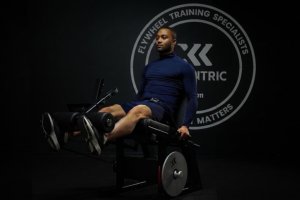
Exxentric has arranged to loan a LegExx for use in a GLP-1 agonist study. The dedicated leg-extension device will allow researchers to apply and monitor targeted quadriceps training within the study.
No results are available, so this is not evidence for an outcome claim. It is a relevant sign of where the research is heading: from discussing muscle preservation in principle to testing structured resistance-training solutions alongside GLP-1 treatment.
Bring the better scorecard home
The changing approach inside facilities offers home users a practical blueprint: start simply, progress gradually, and measure more than body weight. Training consistency, strength, movement confidence, and physical function all reveal progress the scale cannot capture.
The Exxentric App and kMeter can provide performance feedback at home, helping you follow your training and see changes in output over time. This information can also support more useful conversations with a coach, clinician, or other qualified professional.
The boundaries remain important. Home training does not replace medication management, nutrition care, or individual clinical guidance. Its role is to make an appropriate resistance-training stimulus easier to access and repeat.
The best GLP-1 outcome is not simply a smaller body
It is a body that is lighter where intended and still capable where it matters.
GLP-1 medications may help create the weight-loss opportunity. Resistance training helps shape what remains. Compact Flywheel Training makes that work easier to place inside real life. It takes the strength-first approach now emerging in facilities and puts it into a home routine you can control.
Put strength into the plan
Bring compact, full-body resistance training into your home and make strength a consistent part of your GLP-1 plan.
The bottom line
Do not let the scale write the whole story.
Flywheel Training is not a replacement for medication management, nutrition, or clinical care. It is a practical way to deliver the resistance exercise that a stronger weight-loss strategy needs. Put the training stimulus in place while the weight is coming off, then keep it as part of the life you are building afterward.
Key takeaways
- Weight loss can include fat mass and lean body mass; lean mass is not identical to skeletal muscle.
- Resistance exercise during weight loss supports fat-free-mass preservation and strength.
- The fitness industry is increasingly treating strength and function as essential GLP-1 outcomes. Home users can apply the same priority through compact, consistent resistance training.
- Compact home training and microdosing can reduce barriers to consistency.
- Direct flywheel evidence in GLP-1 users remains limited, and the ongoing study involving Exxentric equipment has no results yet.
Make strength the outcome that lasts
Talk to your clinical and exercise professionals about building appropriate resistance work into your GLP-1 plan.
Research referencesGLP-1 weight-loss quality: Sancho-Haro, E., et al. (2026). Optimizing Weight Loss in the GLP-1 Era: Preserving Muscle Mass, Function and Metabolic Health Through Precision Nutrition and Resistance Training. Pharmaceuticals, 19(6), 897. DOI: 10.3390/ph19060897. This narrative review supports combined nutrition, resistance training, and monitoring, but it does not directly test an Exxentric programme.
Resistance exercise during weight loss: Katsimpris, A., et al. (2025). Effect of resistance exercise on body composition, muscle strength and cardiometabolic health during dietary weight loss in people living with overweight or obesity: a systematic review and meta-analysis. BMJ Open Sport & Exercise Medicine. This supports resistance exercise during diet-induced weight loss; it is adjacent evidence rather than a GLP-1-specific intervention trial.
Flywheel microdosing: Maroto-Izquierdo, S., et al. (2026). Microdosing of Flywheel Training: Effects of Low Versus High Training Frequency on Muscle Mass, Strength, and Power. International Journal of Sports Physiology and Performance, 21(9), 1041-1049. DOI: 10.1123/ijspp.2025-0582. The study involved 30 active adults using a flywheel leg press, not GLP-1 users.
Lean body mass during pharmacological treatment: Jobanputra, R., et al. (2026). The Effects of Glucagon-Like Peptide-1 Receptor Agonists and Sodium-Glucose Co-Transporter-2 Inhibitors on Lean Body Mass in Humans: A Systematic Review and Meta-Analysis of Randomised Controlled Trials. Diabetes/Metabolism Research and Reviews, 42(5), e70194. DOI: 10.1002/dmrr.70194. Parts of the pooled estimate combine GLP-1RA and SGLT2i evidence, and lean mass should not be equated directly with skeletal muscle.
Evidence note: Resistance exercise has direct support for improving fat-free-mass preservation during diet-induced weight loss. Current GLP-1-specific literature recommends resistance training but contains limited direct trials of structured strength interventions. The product applications described here are evidence-informed rather than demonstrated treatment effects.
Credited author: Fredrik Correa, M.D., CEO and Co-Founder of Exxentric.