Youth Athlete Strength Training: Advantages, Safe Progression, and Best Practices
For youth athletes, the best strength training environment is not the one that simply adds more load. It is the one that helps them move well, progress gradually, stay engaged, and build qualities that transfer to sport.
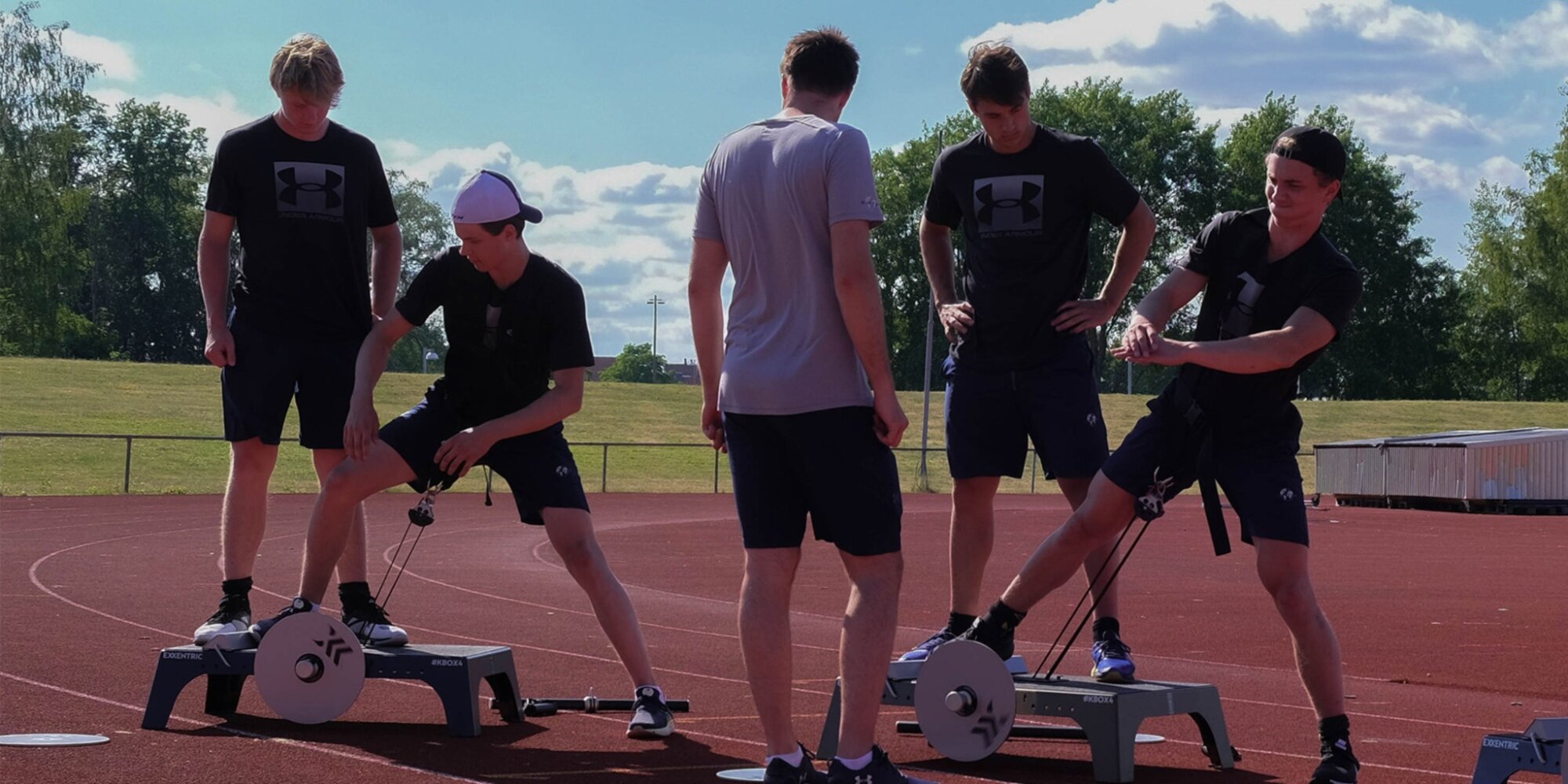
Youth athlete strength training should prioritize movement quality, appropriate progression, confidence, and long-term development. Exxentric systems can support that process by giving coaches precise performance data, responsive resistance, scalable exercise options, and versatile ways to train strength, power, endurance, conditioning, hypertrophy, and sport-specific movement qualities without relying only on heavy spinal loading.
The goal is not to turn young athletes into smaller versions of adult lifters. The goal is to help them move better, produce force with confidence, control their bodies under load, and build physical qualities that support long-term performance.
Youth athletes need training that meets them where they are: technically, physically, emotionally, and developmentally. That means the best program is not always the one that adds the most weight. It is the one that builds strong movement patterns, progresses gradually, and keeps athletes engaged enough to keep improving.
This is where Flywheel Training can be especially valuable. Because the resistance is created by the athlete’s own effort, the system responds to what they put in. In practical terms, that makes it easier to individualize training, progress safely, and develop athletic qualities in a controlled, measurable way.
Why youth athlete strength training needs a different lens
Youth athletes are still developing coordination, confidence, tissue tolerance, and training literacy. Some are ready for structured strength work. Others are still learning how to hinge, squat, brace, jump, land, push, pull, and decelerate with control.
That does not mean strength training should be avoided. It means it should be coached with patience, precision, and appropriate progression.
The best youth programs build capacity while protecting the learning process. Athletes should be challenged, but not rushed. They should feel strong, not overwhelmed. And coaches should be able to adjust the stimulus without turning every progression into a bigger load on the bar.
The advantage of “gentle” variable resistance
One of the most useful features of Flywheel Training for youth athletes is the way resistance is created. With a flywheel system, the athlete accelerates the flywheel during the concentric phase, and that energy returns during the eccentric phase.
In simple coaching language: the system gives back what the athlete puts in. If they produce less force, the returning demand is lower. If they produce more force, the returning demand increases. That makes the resistance responsive rather than fixed, which can help create a more controlled progression path for developing athletes.
This does not remove the need for coaching, supervision, or sound programming. But it does give coaches a valuable way to scale intensity. Instead of asking a young athlete to manage a heavy external load before they are ready, the coach can build intent, rhythm, range of motion, and eccentric control gradually.
That is why flywheel resistance can feel less intimidating for many youth athletes. They are not standing under a bar wondering whether the weight is too heavy. They are learning to produce force, control force, and improve output rep by rep.
Precise data tracking makes progression easier to coach
Youth development is often judged too casually. A coach may see that an athlete looks faster, stronger, or more confident, but without data it can be hard to know how training is actually progressing.
With Exxentric systems and connected performance feedback, coaches can track output more precisely. This helps make progression more objective and less dependent on guesswork.
For youth athletes, this can be powerful. Data gives the coach a better way to reward quality, not just load. It also helps athletes see progress, which can make training more motivating and easier to buy into.
Power movements can be easier to learn than Olympic lifting variations
Olympic lifting can be an excellent tool in the right environment, with the right athlete and the right coach. But it also requires time, technical skill, mobility, and consistent supervision.
For many youth programs, especially team settings with limited time, the priority is often simpler: develop power safely, efficiently, and in ways athletes can learn quickly.
Flywheel movements can help. Exercises such as squats, split squats, lateral pulls, rows, hip extensions, and rotational movements can be introduced with familiar patterns and progressed based on the athlete’s control. Coaches can still train intent, acceleration, braking, and re-acceleration without needing every athlete to master a technically demanding Olympic lift variation first.
Strength development without relying only on spinal loading
Traditional barbell training often places load directly through the spine. That can be appropriate for some athletes at the right stage, but it is not the only way to build lower-body strength.
With options such as belt squats and harness-based squat patterns on the kBox, coaches can train lower-body force production while reducing the need for a barbell on the back. This can be especially useful when teaching younger athletes, managing mixed training ages, or building confidence before introducing heavier axial loading.
Removing the bar from the shoulders can also make the session feel less threatening. The athlete can focus on posture, rhythm, range, and force production instead of feeling pinned under a heavy implement.
That does not mean barbell work has no place. It means coaches have more options. And for youth athletes, having more ways to load movement intelligently is a major advantage.
Easier to tailor training for specific sports development
Youth athletes rarely need one generic program. A basketball player, hockey player, soccer player, sprinter, swimmer, and tennis player all need strength, but they express it differently.
Exxentric systems make it easier to adjust exercises, stances, vectors, ranges of motion, and training intent based on the sport. A coach can emphasize vertical force, horizontal force, lateral control, rotational power, deceleration, repeated efforts, or unilateral stability depending on the athlete’s needs.
One system can train multiple general physical preparation qualities
Youth athletes need broad physical development. Early specialization can leave gaps, so general physical preparation should build a wide base: strength, power, endurance, coordination, conditioning, hypertrophy, and movement confidence.
Flywheel Training supports that kind of broad development because the same equipment can be programmed in different ways. Coaches can use heavier inertia and controlled tempos for strength. They can use lower inertia and high intent for power. They can use repeated sets, circuits, and shorter rests for conditioning. They can use moderate volumes for hypertrophy and tissue capacity.
For coaches working with groups, that versatility matters. It allows one training station to serve multiple goals across different ages, sports, and development levels.
Youth athletes are more likely to train well when the experience feels engaging, understandable, and achievable. The responsive feel of Flywheel Training, combined with visible performance feedback, can make sessions feel more interactive and less intimidating than traditional heavy lifting environments.
Why fun and confidence are not minor details
In youth training, enjoyment is not a soft extra. It affects consistency, effort, and long-term development.
If an athlete feels intimidated, confused, or constantly unsuccessful, the program may look good on paper but fail in practice. If the athlete feels capable, challenged, and able to see progress, training becomes something they want to return to.
Flywheel Training can support that experience because it feels active and responsive. Athletes can compete against their own numbers, learn what better effort feels like, and experience progress without every session being framed around adding more weight.
Best practices for training youth athletes with flywheel systems
Flywheel Training is not a shortcut around good coaching. The same principles still matter: quality first, progress gradually, and keep the athlete’s development stage in mind.
A simple progression model
1. Learn the pattern. Start with controlled movement, moderate effort, and clear coaching cues.
2. Build consistency. Keep the exercise simple until the athlete can repeat good reps without losing posture or rhythm.
3. Increase intent. Ask for more force, speed, or power only when control is reliable.
4. Add sport relevance. Progress toward unilateral, lateral, rotational, or higher-speed movements when the athlete is ready.
5. Track and adjust. Use performance data and coach observation together to guide progression.
Where Exxentric systems fit in youth athlete development
Exxentric equipment gives coaches a practical way to combine measurable output, variable resistance, and broad exercise versatility in one training environment.
The kBox is especially useful for lower-body strength, belt squat variations, split-stance work, and force production patterns. The kPulley expands the possibilities for horizontal, rotational, and sport-specific cable-based movements. Together, they give coaches more ways to develop athletic qualities without relying on one loading method or one exercise category.
For youth athletes, that flexibility can make training more accessible. For coaches, it can make programming more precise, scalable, and easier to adapt across different athletes and sports.
Key takeaways
- Youth athlete strength training should prioritize movement quality, confidence, and progressive development.
- Flywheel resistance is responsive: the athlete creates the force, and the system returns force based on that effort.
- Precise data tracking helps coaches monitor effort, progression, consistency, and readiness.
- Flywheel movements can make power development easier to teach than more technical Olympic lifting variations in many youth settings.
- Belt and harness squat options can help train lower-body strength without relying only on spinal loading.
- Exxentric systems make it easier to tailor training toward different sports, movement patterns, and physical qualities.
- The training experience can feel more engaging and less intimidating, which supports long-term athlete buy-in.
The bottom line
Youth athletes need more than heavier loads. They need better movement, gradual progression, confidence, and training that supports the demands of their sport.
Flywheel Training gives coaches a practical way to build those qualities. With responsive resistance, precise data, scalable exercise options, and versatile programming, Exxentric systems can help young athletes develop strength that is measurable, adaptable, and built for movement.
Build youth strength with control, confidence, and progression
Explore how Exxentric systems support athletic performance training across strength, power, conditioning, and sport-specific development.