


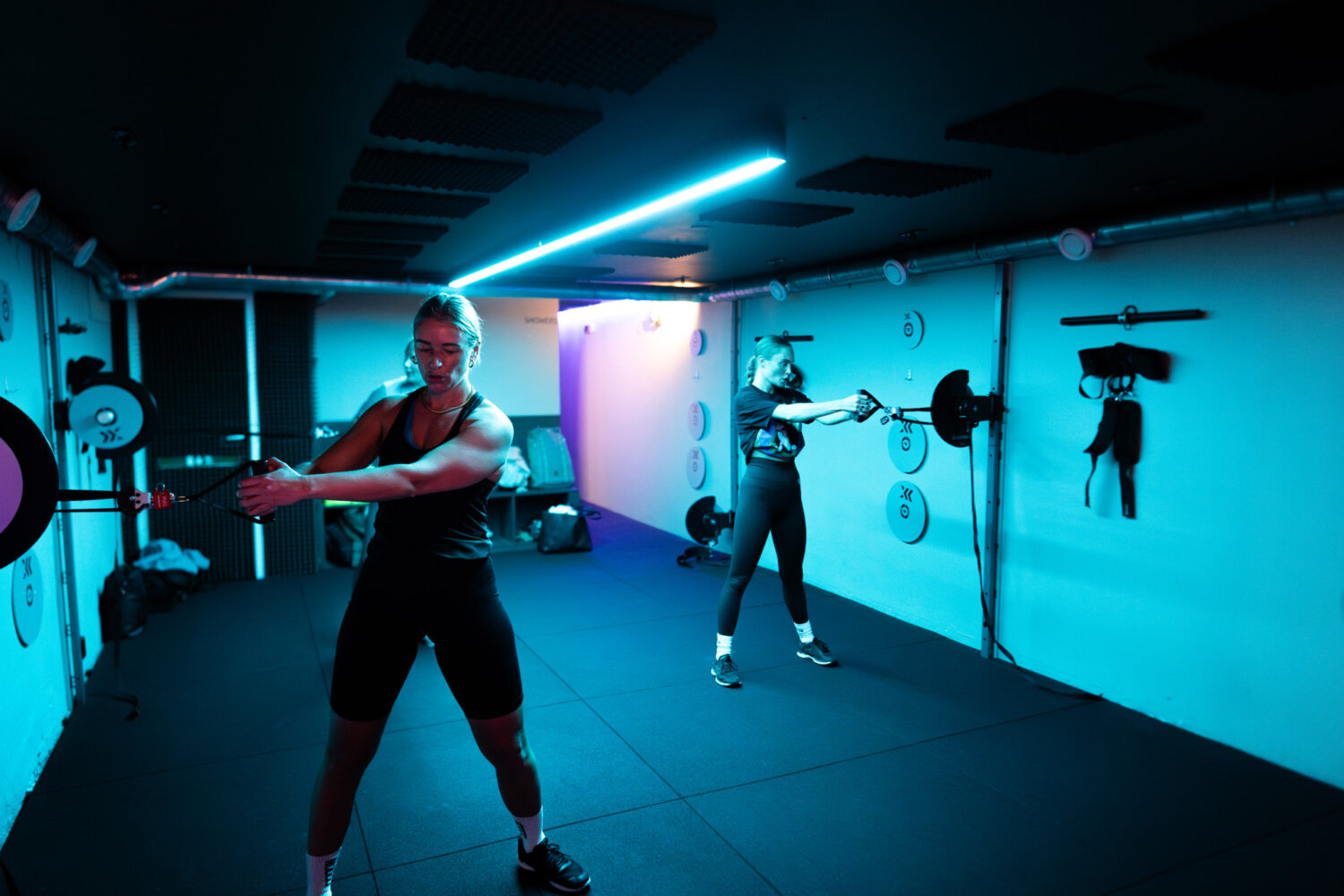
Strength Training for Women, Not Borrowed From Men
For decades, much of women’s fitness revolved around becoming smaller. Burn more. Weigh less. Keep the dumbbells light. Avoid looking “too strong.”
But life does not become lighter. Careers, sport, pregnancy, children, caring for parents, menopause, and ageing all ask more of the body. The greater long-term risk is rarely becoming too muscular. It is reaching later life with too little strength, too little bone, and too little confidence in what the body can still do.
Strength training for women is not a cosmetic extra. It is protection: for muscle, bone health, performance, and independence.
Muscle matters. Bone changes the stakes.
Muscle is easy to understand because we can feel it working. It helps us run, lift, climb, carry, and recover. It supports joints and gives everyday movement a margin of safety. Build more capacity now, and ordinary life demands a smaller share of it later.
Bone is quieter. We usually do not feel bone density changing, yet the consequences become very real when it is lost. The decline in oestrogen around menopause can accelerate bone loss, increasing the importance of habits that help preserve skeletal health. Progressive resistance training provides mechanical loading that bone needs, while also building the muscle and balance that support physical function.
The effects are not magical or identical for every woman. In a review of 80 exercise studies involving 5,581 postmenopausal women, training had positive effects at the lumbar spine, femoral neck, and total hip, although results varied across programmes. The practical message is clearer than the fine print: bone needs a reason to remain strong, and that reason should arrive before fragility does.
Muscle deserves the same forward thinking. Women can gain strength before and after menopause, but age, inactivity, symptoms, and the menopausal transition can make muscle harder to preserve. Waiting until getting out of a chair, lifting a suitcase, or recovering from a fall becomes difficult is waiting too long.
Strength is a reserve. Build it while life is going well, then keep giving the body a reason to hold on to it.
The principles are shared. The context is not.
Women do not need a separate strength-training universe. Progressive overload still works. Consistency still matters. Recovery still matters. A challenging set is still a challenging set.
What differs is the context in which those principles are applied. Female physiology, symptoms, life stage, training history, confidence, and responsibilities can all affect what useful training looks like on a given day.
Female physiology should guide the conversation, not write the whole programme
The menstrual cycle is the obvious place to start, partly because it attracts the loudest claims. Some women notice clear changes in pain, energy, confidence, or performance across the month. Others notice very little. Current evidence does not support a universal calendar that tells every woman when she should push and when she should stop. Average effects on strength are small or inconsistent. Individual symptoms still matter.
That distinction is important. Listening to the body is sensible. Turning every cycle phase into a rigid rule is not.
Pregnancy and postpartum recovery create more substantial changes, but here too the answer is individual rather than absolute. In an uncomplicated pregnancy, appropriately modified strength training can remain part of an active life. After birth, returning gradually matters. Delivery, healing, sleep, pelvic-floor symptoms, abdominal-wall function, pain, and medical considerations all shape the path back.
Perimenopause and menopause add another layer. Interrupted sleep, hot flushes, joint symptoms, changes in recovery, and shifts in muscle and bone can all influence training. A woman who slept badly after a night of symptoms may not produce what she did last week. That does not mean the session is pointless. It means today’s session should respond to today’s athlete.
Female physiology does not remove the need to train hard enough to adapt. It makes intelligent adjustment part of training well.
What this means in practice
A useful strength programme should train the whole body, progress over time, and create enough challenge to drive adaptation. Women do not need to live in the light-weight corner of the gym. They also do not need to force the same load on every day to prove that the training counts.
On a good day, push. On a lower-readiness day, adjust the effort, range, volume, or exercise. During pregnancy, postpartum recovery, injury, or clinical concerns such as osteoporosis, get qualified guidance and adapt more deliberately. The goal is not perfect consistency of performance. It is consistency of practice.
Lower-body goals can be a powerful place to begin. Squats, hinges, lunges, and split squats build the hips and legs many women want to train. But the programme should grow from there. Rows, presses, pulls, and carries build the upper-body strength needed for sport, work, children, luggage, and long-term independence.
Start with what motivates her. Then build what will serve her.
The best programme still has to fit a real life
Women do not stop strength training because they failed to read another perfect programme. Often, the programme failed to fit their lives.
Studies of women’s experiences repeatedly identify the same friction: intimidating gym spaces, uncertainty around equipment, gendered comments, limited access, lack of routine, and the collision between training, work, and family responsibilities. Social support helps. So does removing the journey, the waiting, and the feeling of being watched while learning.
Consider the difference between needing a free hour and needing fifteen minutes. One requires planning, travel, and childcare. The other might fit before the first meeting, while a child naps, or between the school run and dinner. Home access does not make training less serious. It makes the next session more likely.
Company can help too. Some women want a coach or a group around them. Others want to train with a friend or partner at home. The format matters less than the encouragement, accountability, and feeling that strength training belongs in everyday life.
A programme only works when the woman can return to it. That is not a motivational footnote. It is part of the programme design.
This is where flywheel training earns its place
Flywheel Training does not balance hormones. It does not predict the menstrual cycle, remove menopausal symptoms, or decide when a woman should train hard.
It does something more useful: it responds to the effort she produces.
Instead of lifting a fixed external weight, the user accelerates a flywheel. The energy returns through the strap, and she brakes it during the eccentric phase. Push harder and more energy comes back. Reduce the effort and the demand falls with it. The resistance reflects the repetition being performed rather than a number chosen before the set began.
That makes the experience intuitive. A beginner can move with control without first guessing the correct plate. A strong, experienced user can produce much more force on the same machine. If sleep, symptoms, stress, or recovery affect readiness, the system responds to what is available.
The flywheel does not need to know why Tuesday feels different. It simply meets the effort in front of it.
Adaptable does not mean easy
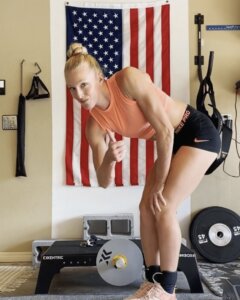
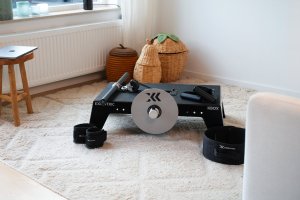
Effort-responsive resistance can feel approachable without placing a low ceiling on strength. The kBox supports squats, Romanian deadlifts, lunges, split squats, rows, and presses. The kPulley expands horizontal, rotational, pulling, and other cable-based movements.
The same system can meet a cautious beginner, a performance athlete, or two partners with very different strength levels. Each creates resistance through her or his own effort.
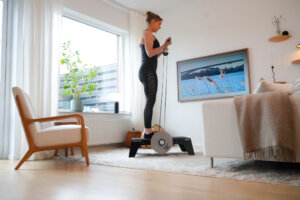
At home, the kBox Active System makes full-body resistance training available without a rack or collection of loose weights. Flywheel operation is quiet, although foot contact and normal movement still create some sound. That makes early mornings, nap windows, and shared homes easier to navigate.
It also makes sharing simple. Partners with different strength levels can alternate sets without rebuilding a barbell after every handover. Friends can train together without needing identical strength. Adjust the setup when necessary, then let each person produce her own resistance.
The benefit is not that one device treats every woman the same. It is that one device can respond differently to every person who uses it.
When fifteen minutes is the time you actually have
Strength training does not have to arrive as one perfect hour. Microdosing divides the week’s work into shorter sessions. For mothers, caregivers, shift workers, and anyone with an unpredictable calendar, that can be the difference between an imperfect week of training and no training at all.
A small 2026 flywheel study compared five leg-press sets performed in one weekly session with one set performed on five days. Both groups completed the same weekly volume and improved strength. The more frequent group reported lower perceived effort and soreness, with some additional adaptations. The study was not specific to women and does not establish one perfect schedule. It does show that useful work can be distributed.
A short session is not a failed long session. It is training that happened.
A practical starting week
This programme is not “female” because the exercises belong to women. They do not. It is designed around the context described above: balanced strength, a useful lower-body emphasis, adjustable effort, and sessions short enough to repeat. The kBox exercise library and kPulley exercise library provide movement demonstrations and additional options.
Monday: squat and row, 15-20 minutes
-
- kBox squat: 2 sets of 6-10 controlled repetitions.
- kBox or kPulley row: 2 sets of 6-10 repetitions.
Wednesday: hinge and press, 15-20 minutes
-
- kBox Romanian deadlift: 2 sets of 6-10 repetitions.
- kBox or kPulley press: 2 sets of 6-10 repetitions.
Friday: unilateral legs and upper-body pull, 15-20 minutes
-
- kBox split squat: 2 sets of 6-8 repetitions per side.
- kBox high pull or kPulley pulldown: 2 sets of 6-10 repetitions.
Optional weekend microdose
- Repeat one squat or hinge and one row or press.
- Complete 1-2 quality sets, alone or while alternating with a friend or partner.
Begin with several good repetitions still available at the end of each set. Progress one variable at a time. On lower-readiness days, reduce effort, range, inertia, or sets. Pregnancy, postpartum recovery, pelvic-floor symptoms, pain, osteoporosis, or other clinical considerations require individual guidance from a qualified professional.
Why flywheel works in the real world
Flywheel Training removes friction without removing challenge. There is no barbell to reload, no collection of plates to manage, and no fixed external weight that turns a lower-readiness day into an all-or-nothing decision. A woman can begin with controlled effort, push harder as confidence grows, and use the same system for squats, hinges, rows, presses, and more.
That flexibility matters when time is short. A focused full-body session can happen at home without a commute or a long setup. When training with a friend or partner, users can alternate without needing the same strength level. When readiness changes, the effort can change with it while the session still moves forward.
Challenging resistance, quick adjustments, broad exercise choice, and immediate access all support the outcome that matters most: making serious strength training easier to start, repeat, and sustain.
Strength should be treated as essential
Women should take strength seriously: for muscle, bone health, performance, and long-term independence. They do not need a completely different rulebook. They need the fundamentals applied with female physiology, changing life stages, and real life in view.
Flywheel Training makes that application intuitive. It can challenge the woman who is ready to push, respond when readiness changes, and make consistent strength work easier to place inside an already full life.
Build strength around the woman doing the work
Explore the kBox Active System or see how Flywheel Training works.
Research references
Resistance training across the female lifespan: Isenmann, E., et al. (2026). It’s never too late: The impact of resistance training on strength and body composition in females across the lifespan. Journal of Science and Medicine in Sport, 29(10), 1174-1185. DOI: 10.1016/j.jsams.2026.03.002. Strength improved before and after menopause; individualisation matters more than rigid sex- or age-based rules.
Exercise and postmenopausal bone density: Mohebbi, R., et al. (2023). Exercise training and bone mineral density in postmenopausal women: an updated systematic review and meta-analysis of intervention studies with emphasis on potential moderators. Osteoporosis International, 34(7), 1145-1178. DOI: 10.1007/s00198-023-06682-1. The review included 80 studies and 5,581 participants; effects were positive but varied across programmes and skeletal sites.
Menopause and muscle: Menzies, C., et al. (2026). Menopause, Female Sex Hormones, Skeletal Muscle Mass and Muscle Protein Turnover in Humans. Journal of Cachexia, Sarcopenia and Muscle. DOI: 10.1002/jcsm.70232. Muscle changes appear to coincide with menopause, while high-quality causal evidence remains limited.
Cycle-related performance: Colenso-Semple, L. M., et al. (2023). Current evidence shows no influence of women’s menstrual cycle phase on acute strength performance or adaptations to resistance exercise training. Frontiers in Sports and Active Living, 5, 1054542. DOI: 10.3389/fspor.2023.1054542. The evidence does not support universal phase-based prescriptions.
Women’s strength-training barriers: Vasudevan, A., & Ford, E. (2022). Motivational Factors and Barriers Towards Initiating and Maintaining Strength Training in Women: a Systematic Review and Meta-synthesis. Prevention Science, 23(4), 674-695. DOI: 10.1007/s11121-021-01328-2. Stigma, access, knowledge, routine, and work-family balance were barriers; social support was a facilitator.
Female flywheel evidence: Raya-González, J., de Keijzer, K. L., Bishop, C., & Beato, M. (2022). Effects of flywheel training on strength-related variables in female populations: A systematic review. Research in Sports Medicine, 30(4), 353-370. DOI: 10.1080/15438627.2020.1870977. Seven studies with 100 women showed promise, but the evidence base remains small.
Distributed flywheel training: Maroto-Izquierdo, S., et al. (2026). Microdosing of Flywheel Training: Effects of Low Versus High Training Frequency on Muscle Mass, Strength, and Power. International Journal of Sports Physiology and Performance, 21(9), 1041-1049. DOI: 10.1123/ijspp.2025-0582. The small study was not specific to women or the programme above.
Pregnancy and postpartum guidance: American College of Obstetricians and Gynecologists. (2020). Physical Activity and Exercise During Pregnancy and the Postpartum Period. Committee Opinion No. 804. Uncomplicated pregnancies can include strength-conditioning exercise; individual evaluation and appropriate modification remain important.
