



Built for Tight Spaces. Designed to Go Anywhere.
When every centimetre matters, training equipment has to deliver more without demanding more room. It must be compact, versatile and capable of supporting serious training without the footprint of a conventional gym.
That challenge has carried Flywheel Training from astronaut preparation to life at sea. A home gym may be a less extreme setting, but the underlying design question remains: how much useful training can the available space support?
The room sets the rules
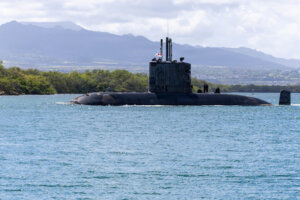
Most gyms are designed by adding equipment until the programme feels complete. Constrained environments reverse that logic. A spacecraft cannot add another room. An icebreaker cannot widen its training area. A submarine cannot give up an operational passageway for a plate tree.
In each setting, equipment competes with people, supplies and essential systems. Storage matters as much as performance. Setup time matters because the space may have another job before and after the session. Loose, heavy equipment also creates practical problems when the environment moves or the floor area is shared.
Apply these constraint in orbit, below the sea, or in your own home and while the environments change, the questions stay the same.
No gravity isn’t your only problem
Inside NASA’s Orion spacecraft, conventional weights are a poor answer twice over. Launch mass and cabin volume are limited, and a barbell cannot provide its usual resistance in microgravity.
NASA’s flywheel exercise device solves both problems with one answer: inertia. Roughly the size of a briefcase, it’s self-adjusting resistance supports strength training and aerobic work for a wide range of trainees. The bar, harness and footplate can be stowed, and the installed device serves as a step at Orion’s side hatch.
Astronauts accelerate the flywheel and control the energy returned through the strap. The device can therefore support movements including squats, deadlifts, rows and curls without carrying a conventional collection of external weights.
The Orion device shows what happens when available space and access to resistance becomes a hard engineering limit. The next setting adds another complication: the floor itself starts moving.
Then the floor starts moving
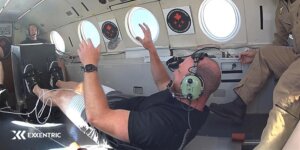
An icebreaker has room for everything needed to cross polar waters, but very little space for anything that cannot justify being there. Crew, provisions, scientific equipment and operational systems all compete for space. An just when you think you’ve solved it; the floor itself starts shifting.
As the vessel pitches and rolls, loose plates and dumbbells become harder to store, secure and handle. Large machines occupy valuable floor space throughout the voyage, even when nobody is training.
That is why icebreaker vessels use the kBox. A compact platform gives crews access to a wide range of strength exercises without bringing aboard racks, weight stacks and extensive free-weight storage. Resistance is generated through the flywheel, while the platform can be repositioned when the training area is needed for something else.
The kBox does not make a moving deck stable. It reduces reliance on loose external weights that are less practical in an unstable environment while the self-regulating resistance smooths out imbalances. Training must still take place under suitable conditions with the equipment used and secured appropriately.
And yet, an icebreaker still has multiple decks, open air and daylight. Go below that water’s surface, and the same equipment problem becomes even more severe.

Under the sea, the challenges compound
The Human Performance Research and Development team at Canadian Forces Morale and Welfare Services had already worked with the Canadian Space Agency on astronaut fitness and occupational performance. Its work included supporting Colonel Jeremy Hansen as he prepared for the Artemis II mission.
The team was then asked to help Royal Canadian Navy submariners train while deployed. The link between the two environments was immediate: restricted space, demanding schedules and equipment that had to meet unusual requirements for storage, noise, vibration and durability.
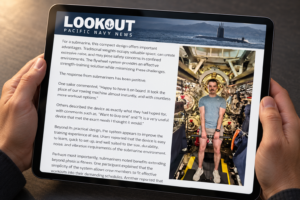
Canadian submariners began using a compact flywheel training device. According to the official Pacific Navy News account, sailors found it easy to learn and quick to set up. One described it as the first proper workout he had completed on a submarine.
Another explained what happened to the existing conditioning equipment: “It took the place of our rowing machine almost instantly, and with countless more workout options.”
A method explored for astronaut fitness had travelled from space to the surface of the ocean and then beneath it. The route reveals why the same idea belongs in far more ordinary rooms.
What gets left behind on the journey home
The strongest space-saving advantage comes from reducing the infrastructure around the workout. Flywheel resistance uses rotating inertia instead of a barbell and a large inventory of plates. One system can support multiple movement patterns, effort levels and session formats.
Setup remains contained around the device. Attachments and flywheels take less storage than several fixed-weight stations, while portable Exxentric systems can be repositioned when the room needs to return to another purpose.
The submarine story adds another possibility. When exercises are organised as continuous work or intervals, the same platform can contribute to general conditioning and reduce the need for a separate cardio machine when floor space is precious.
Your spare corner poses the same design question
A garage, treatment room or small performance facility offers more freedom than Orion, an icebreaker or a submarine, yet floor space can still disappear quickly. A rack occupies one area. Bars, plates and dumbbells need storage. A bench becomes permanent furniture. A bike or rower claims whatever remains.
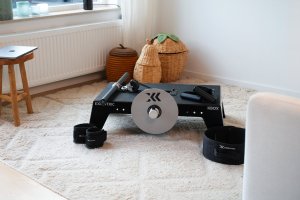
The kBox concentrates a wide range of full-body movements to one platform. Squats, hinges, lunges, rows, presses and pulls can share the same resistance mechanism. Changing exercises generally involves as little effort as adjusting the length of the drive belt.
For a home user, that can mean bringing the platform into position for a session and moving it aside afterwards. In a small facility, it can mean using the same floor area for different clients, exercises and training goals across the day. The kBox exercise library shows how much movement variety can come from the platform.
The Exxentric workout library can help organise sessions without adding another training station. When the workout ends, the platform can move aside and the room can return to work, treatment or everyday life.
The journey from space to sea arrives at a practical decision: use the same floor for more than one purpose.
Back in the room you already have
Orion needed exercise without gravity. Icebreakers need equipment that remains practical when space is restricted and the deck moves. Canadian submariners needed useful training beneath the ocean without importing the footprint, noise and storage demands of a conventional gym.
At home or in a small facility, limited space is a design choice rather than a mission condition. The lesson still applies: begin with the work the room must support, then choose equipment that can enter, perform and yield the floor again.
You’ll find, almost in every situation, you’ll be hard pressed to arrive at a better all-in-one answer than a kBox.
See what your space can support
Explore the kBox Active System for home training and compact facilities.
Article references
Flywheel exercise aboard Orion: NASA describes a compact flywheel device designed for resistance exercises, rowing and aerobic training inside the Orion spacecraft. Its accessories can be stowed, and the installed device also serves as a step at the spacecraft hatch. NASA: Orion Crew Systems.
Flywheel training aboard Canadian submarines: Kung, T., Miller, E. and Chassé, E. (2026). From Space to Sea: Fitness Innovation Finds a Home on Canadian Submarines. Pacific Navy News. The article reports feedback from Royal Canadian Navy submariners using a compact flywheel device.
Exxentric background: Read more about the development of gravity-independent exercise in Flywheel Training in Space, From NASA Origins to Modern Performance.
