

Physiological Advantages
Explore the Physiological Advantages of Flywheel vs Traditional weight training.Need Assistance?

Strength Training Basics
Strength training can be defined as a limited number of repeated muscle contractions against some form of resistance, producing high force.
This stimulates hypertrophy (muscle growth) and increased activation, by the nervous system. These effects together give an increase in strength over time, if the exercise is repeated regularly.
Flywheel Training Advantages
Flywheel Training
Advantages
-

Inertia > Gravity
While traditional weights are lifted against gravity, flywheel training creates resistance through inertia working like a yoyo. So, the harder you pull – the harder it pulls back. -

Variable Resistance
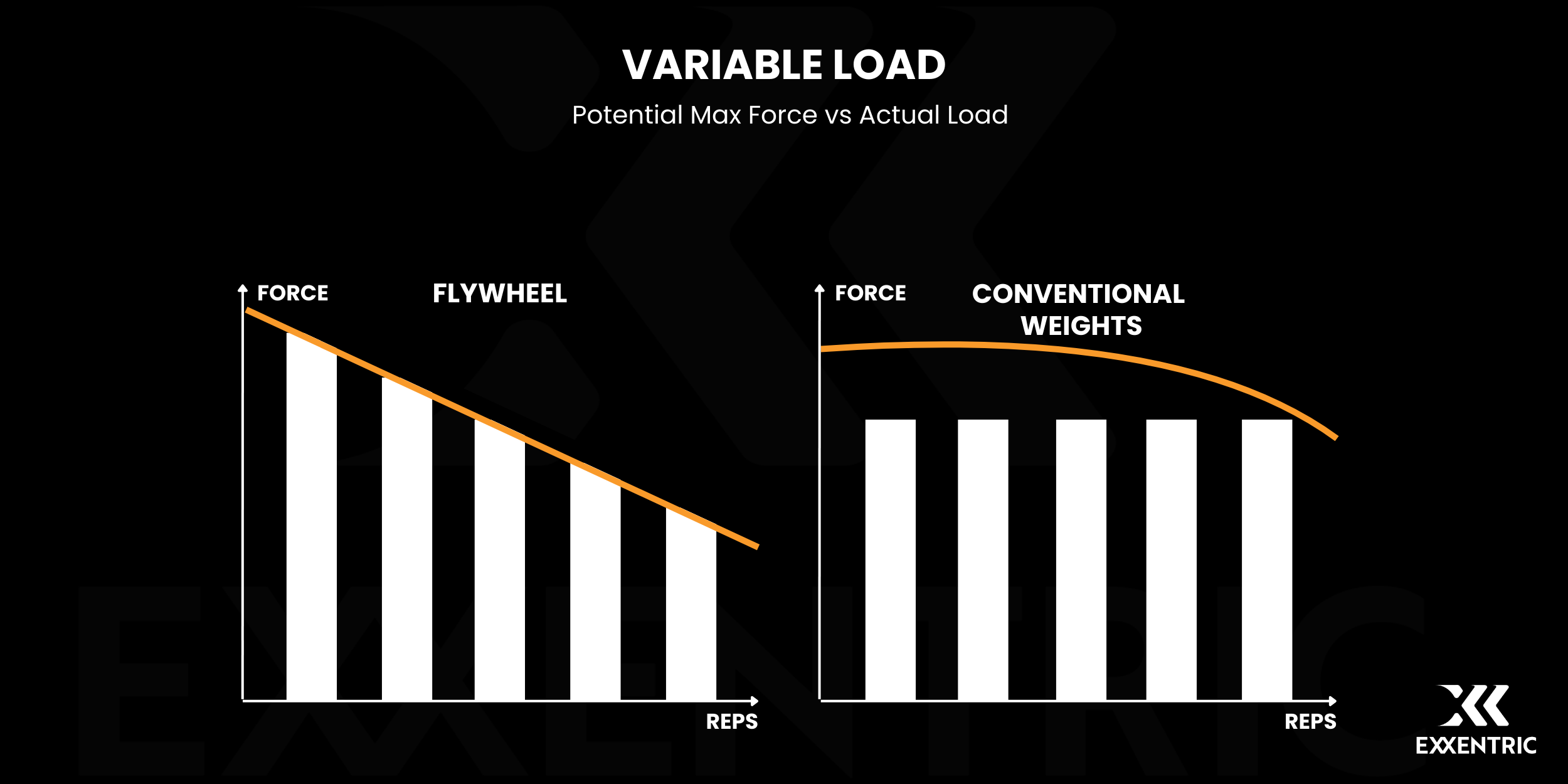
In contrast to weights, Flywheel training offers variable resistance. This allows you to train maximally throughout every rep and the entire ROM without sticking points. -

Eccentric Overload
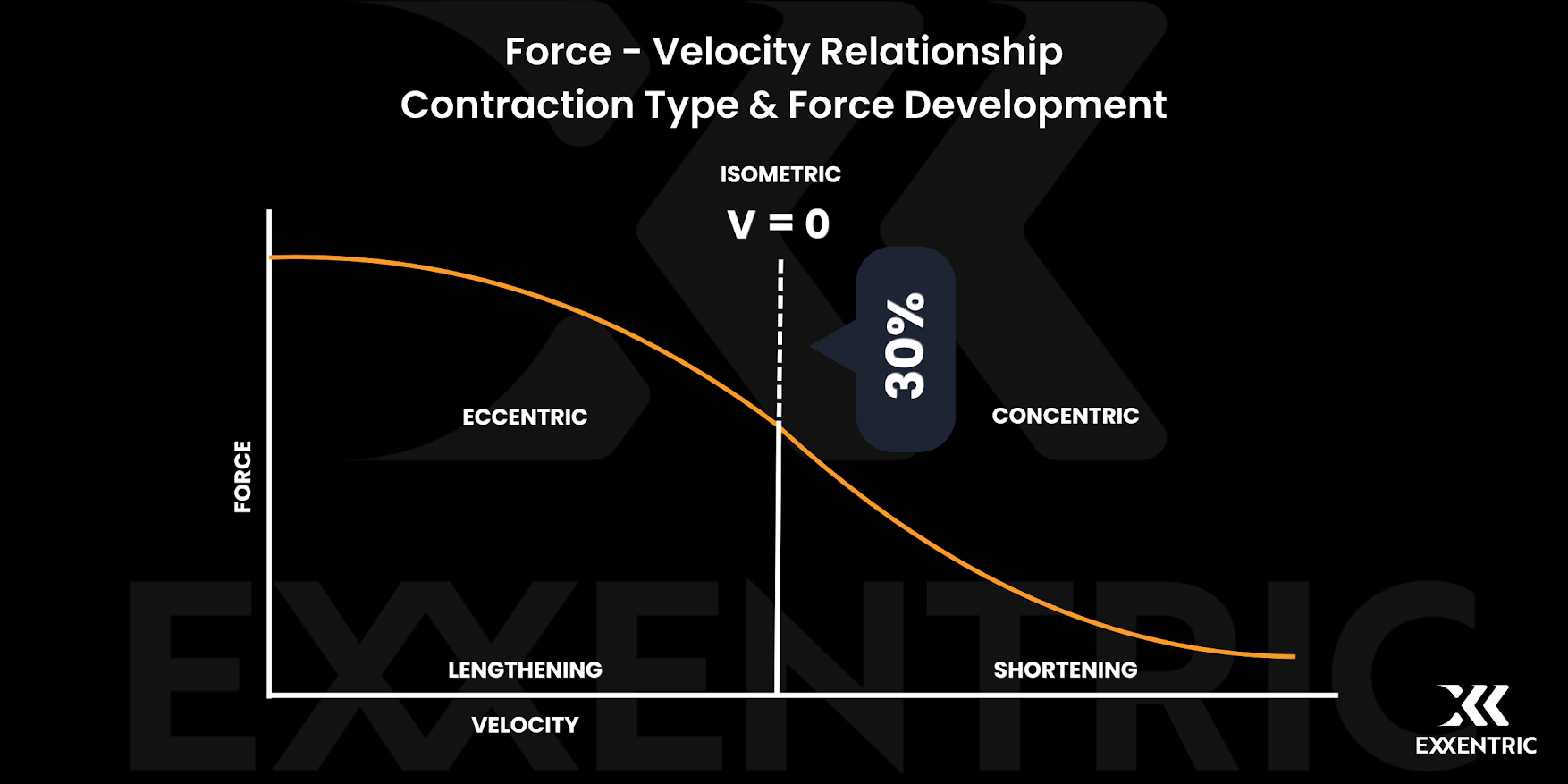
Flywheel training allows you to apply larger forces eccentrically than concentrically through advanced techniques – resulting in greater strength gains. -

Isoinertial
Flywheel training maintains a constant inertia throughout the entire ROM – allowing for the production of maximum loading at every angle of the movement.
Eccentric Training
Your muscles are stronger in the eccentric phase of its motion, but it is difficult to reach your maximal eccentric power in traditional weight training. In flywheel training, you can use the kBox to achieve eccentric training with overload safely without help.
Variable Resistance
One of the key advantages of Flywheel Training is variable resistance. Unlike traditional weights, the resistance adapts directly to the force you apply, repetition by repetition.
With an Exxentric device, the resistance spectrum is effectively unlimited, as it is determined by how hard you work rather than by fixed loads. This makes Flywheel Training suitable not only for elite athletes or rehabilitation, but for anyone seeking effective strength development.
Because the resistance adjusts continuously, you can maintain high effort across every repetition in a set, which supports consistent loading and can contribute to greater hypertrophic stimulus

Scientific Evidence
Multiple academic studies have provided support for flywheel training and eccentric training. Here is a selection of some of the more important studies in the field.