By Fredrik Correa, CEO and Co-Founder of Exxentric.
Listen instead of Read:
Did you know that studies on soccer players show roughly 600 to 700 turns of varying intensity during a single match?
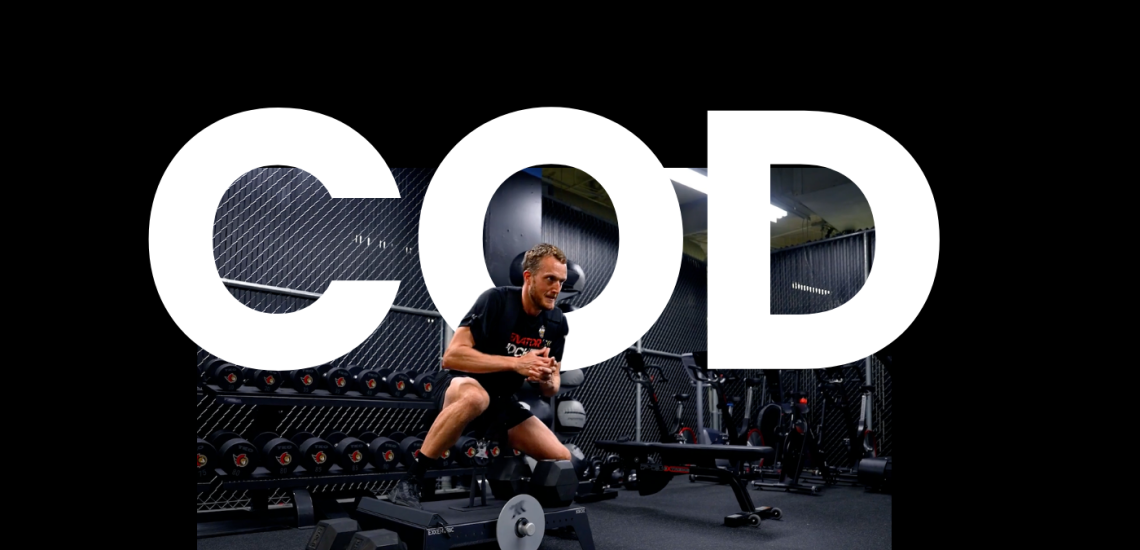
This makes change of direction (COD) one of the most decisive abilities in sports. In competition, athletes are rarely asked to perform a straight line 100 meter sprint or exert maximal 1RM squat strength. However, almost without fail, they are required to perform hundreds of high intensity changes of direction.
So whether it is a hockey player accelerating out of a turn, a soccer player cutting past a defender, or a basketball player planting and exploding toward the rim, outperforming the competition often comes down to how well an athlete can brake, redirect, and reaccelerate.
In this article, Fredrik Correa explains how Flywheel Training with Exxentric devices like the kBox and kPulley offers unique advantages that help athletes develop the strength, control, and timing required for elite change of direction performance.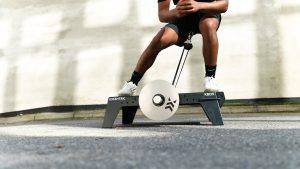 The Origin of the kBox: Training Lateral Power for Hockey
Circa 2011, a young hockey S&C coach, and now Exxentric CEO, asked a simple question.
Why are we training vertically for a sport that is won and lost laterally?
In hindsight, the answer was obvious. Hockey players needed a better way to train the lateral power demands and movement patterns of their sport, and traditional barbell exercises were not fully addressing those needs.
Traditional weight training mostly emphasizes vertical movement patterns such as back squats and deadlifts. These are valuable for general strength development, but skating and change of direction rely heavily on lateral force production and control.
And thus, the first kBox Flywheel System was born.
Using rotational inertia rather than gravity, athletes could train powerful lateral squats that closely resemble the skating stride. Athletes push explosively to generate momentum and then control the returning energy during the braking phase.
This combination made the kBox an ideal tool for developing the mechanics required for lateral movement and change of direction.
Today the same principle applies across many sports. Soccer, basketball, handball, tennis, rugby, and many others demand the ability to accelerate, decelerate, and redirect force quickly and efficiently.
What Is Change of Direction (COD) in Sport?
Change of direction performance is not just about speed. It is about how effectively an athlete can absorb force, control momentum, and redirect energy into the next movement.
During a cut or turn, an athlete must rapidly decelerate before they can transfer force into a new direction. If the braking phase is weak or poorly coordinated, valuable time and energy are lost.
Over the course of a match, these small inefficiencies accumulate and often determine the difference between winning and losing.
This is where Flywheel Training becomes particularly effective for COD training.
The returning energy of the flywheel closely mirrors real sport demands by requiring athletes to actively absorb force and time the transition from eccentric braking to explosive propulsion.
Transferable Movement Patterns for Change of Direction
One of the biggest advantages of Exxentric Flywheel Systems is how easily they allow athletes to train sport-specific movement patterns.
Because resistance automatically adapts to the direction and speed of the athlete’s movement, exercises can be performed in planes that traditional barbell training often struggles to replicate.
Movements like lateral squats, staggered squats, and multi-directional single-leg variations mirror the mechanics of skating, cutting, and pushing off the ground in sport.
Instead of simply building general strength, athletes can train to express strength within the same movement patterns used in competition.
This creates a powerful transfer from training to in-game change of direction performance.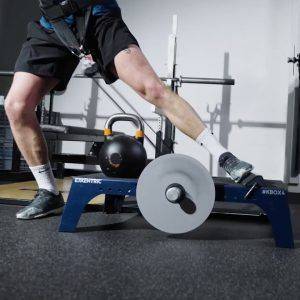
Why Braking Strength Determines Change of Direction Performance
Effective change of direction starts with the ability to brake. If an athlete cannot absorb the initial braking force, they cannot redirect it.
To successfully change direction, athletes must be accustomed to absorbing large forces during high speed deceleration.
This is where a flywheel’s enhanced capacity for eccentric overload becomes an invaluable tool for change of direction training.
2 to 1 overload
Athletes drive the movement with two legs during the concentric phase and absorb the returning force with one leg. This overloads unilateral braking patterns similar to using one leg to stop a sprint before cutting in the opposite direction.
ROM-specific overload
Athletes produce maximal force during the concentric phase and absorb the returning energy at a targeted joint angle, such as around 45 degrees of knee flexion. This strengthens the exact positions where braking and change of direction occur in sport.
Resistance That Adapts to the Athlete
Unlike traditional weights, flywheel resistance increases with the output of the athlete.
The harder the athlete drives, the more energy is stored in the rotating flywheel. That same energy then returns during the braking phase.
This creates resistance that adapts to the athlete on every repetition.
Early repetitions allow athletes to produce maximal power, while later repetitions challenge endurance and coordination as fatigue builds.
For athletes in change of direction sports that must perform repeatedly through fatigue, this provides both a power and conditioning stimulus that closely resembles competition demands.
Timing the Transition Between Braking and Propulsion
Change of direction performance is not just about force production. It is also about timing.
Elite athletes are able to absorb eccentric braking forces and rapidly convert them into explosive propulsion.
Flywheel Training teaches athletes to control this transition. The athlete must absorb the returning energy of the flywheel and immediately redirect it into the next movement.
Mistime the transition and movement efficiency is lost.
Over time, this improves the neuromuscular coordination required for fast and efficient change of direction.
Sport-Specific Range of Motion Training
Another advantage of Exxentric Flywheel Systems is the ability to produce maximal effort at sport-specific ranges of motion.
Because resistance is momentum based rather than gravity dependent, athletes can drive with full intent in positions that resemble real sport movements.
No sticking points
Resistance continuously adapts to the athlete, allowing effective loading through every joint angle.
Adjustable range of motion
Athletes can train specific joint angles such as the bottom phase of a lateral squat for maximal push-off power or the top phase to improve timing and speed.
This allows athletes to build strength exactly where it matters most during cutting, skating, and acceleration.
Training Rotation for Real Sport Movement
Most change of direction movements are not purely linear.
Athletes rotate their hips, trunk, and shoulders as they cut, pivot, or accelerate into a new direction.
Training rotational control helps athletes coordinate the upper and lower body and transfer force more efficiently from the ground through the hips and torso.
Flywheel resistance is particularly effective here because the returning energy forces athletes to control both rotation and deceleration simultaneously.
Exercises for Change of Direction
Exxentric devices are uniquely suited for exercises that reinforce lateral strength, unilateral control, rotational coordination, and braking capacity.
Key exercises include:
Lateral Squat
Develops lateral force production similar to the skating stride.
Staggered Stance or Side-to-Side Squats
Reinforces unilateral power and balance used in cutting movements.
Harness Squats
A foundational strength exercise using the Harness.
Single-Leg Squats and Split Squats
Develop unilateral force production and stability for sport specific actions.
Single-Leg Romanian Deadlifts
Strengthen the posterior chain while improving balance and control.
Eccentric Overload Squats
Using the 2:1 or targeted ROM methods to reinforce braking strength in patterns that resemble skating or cutting mechanics.
Rotational Sling / Zercher Squat + Rotation
Full body patterns where the athlete initiates rotation from the pivot of the feet through the torso. This reinforces the coordination between the hips, trunk, and upper body that often occurs during change of direction in sport.
All these exercises and more can be explored in the Exxentric exercise library.
https://exxentric.com/training/exercises/
How to Perform a Lateral Squat on the kBox
One of the most effective exercises for change of direction training on the Exxentric kBox is the lateral squat.
Using the Foot Block accessory allows athletes to generate powerful lateral force while maintaining a stable platform.
-
Secure the kBox and attach the Foot Block
-
Place one foot on the Foot Block and the other on the platform
-
Hold the strap using a harness or hip belt
-
Sit into a lateral squat while loading the outside leg
-
Drive explosively sideways to accelerate the flywheel
-
Absorb the returning energy under control
The Foot Block provides a stable surface that allows athletes to produce and absorb lateral force safely and effectively.
Learn more about the Foot Block:
https://exxentric.com/store/accessories/training/foot-block/
NHL’s Anton Forsberg with a Demo:
Key Takeaways: Improving Change of Direction Performance
-
Absorb braking forces during deceleration
-
Redirect force quickly into a new direction
-
Transition efficiently from eccentric braking to concentric propulsion
-
Produce maximal force in sport-specific movement patterns
Flywheel Training with Exxentric Systems such as the kBox and kPulley provides unique advantages that support all of these qualities.
To learn how to implement these exercises and track your progress, explore the programs and guidance available in the Exxentric App.